

The leopard gecko is one of the easiest reptiles to keep in captivity, and also one of the species most often kept in poorly set-up terrariums. Not because it is complicated, but because the mistakes with this species are always the same: wrong temperature, humidity too high, no moist hide, no thermostat. The result is not immediate, but it is cumulative: shedding problems, respiratory infections, metabolic bone disease. This guide covers everything you need to set it up properly from day one.
Recommended setup for an adult leopard gecko
What we recommend in this guide.
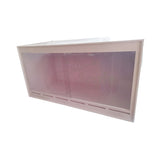
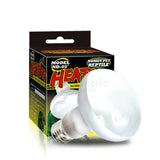
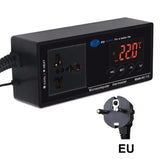
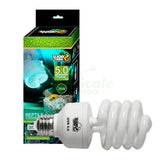
See also: Gecko terrariums.
What does a leopard gecko need in its terrarium?
Before talking about sizes or materials, it is worth understanding why each element matters. The leopard gecko is an ectothermic reptile that does not generate its own body heat: it uses its surroundings to regulate its internal temperature. If the terrarium does not have a real thermal gradient, the animal's metabolism gets thrown off even if it seems to be fine.
Unlike many other species, the leopard gecko is terrestrial and crepuscular. It comes from arid and semi-arid regions of Pakistan, Afghanistan and India, where surfaces such as rocks and soil build up heat during the day and release it gradually as night falls.
In captivity, the ideal is to recreate a thermal gradient that allows the animal to thermoregulate properly.
Humidity is also a key factor. The leopard gecko needs a generally dry environment, but with access to a moist hide that allows it to shed properly.
Excessive ambient humidity, especially combined with poor ventilation or unsuitable temperatures, can encourage respiratory problems. On the other hand, humidity that is too low with no moist areas available can cause shedding difficulties, such as retained skin.
Discover all the products available in our collection of gecko terrariums.
Leopard gecko terrarium size
Size for an adult
The recommended minimum for an adult leopard gecko is 60 x 40 x 40 cm of floor space. This figure is not arbitrary: it comes from the need for a real thermal gradient from one end of the terrarium to the other. If the space is too short, the warm and cool zones overlap and the animal cannot choose its body temperature, which is exactly what it does in the wild.
The height of the terrarium is not a critical parameter for this species. 40 cm is more than enough. The leopard gecko does not climb: it spends almost all its time on the ground. A tall terrarium for a leopard gecko adds nothing useful and makes the terrarium unnecessarily expensive.
Ideal temperature for a leopard gecko
The thermal gradient: how it works
The temperature in a leopard gecko terrarium is not a single number: it is a range. The animal needs to be able to move between warmer and cooler zones to actively regulate its body temperature throughout the day. Without that gradient, its metabolism does not work properly.
The correct setup is:
| Zone | Surface temperature |
|---|---|
| Hot spot (basking zone) | 30–32 °C |
| Warm zone (centre of the terrarium) | 26–28 °C |
| Cool zone (opposite end) | 22–24 °C |
| Night-time temperature (whole terrarium) | 18–22 °C |
The right heat source for a leopard gecko
This is one of the areas where most mistakes are made. In its natural habitat, the leopard gecko warms up both through contact with warm surfaces and from the thermal radiation built up during the day in rocks and soil.
In captivity, the ideal is to provide a real thermal gradient that lets the animal choose. This can be achieved with an overhead heat source (such as a heat spot lamp) that directly warms the surfaces, complemented if desired by heat from below the substrate, always controlled by a thermostat.
Relying solely on a heat mat can create unnatural warm areas and make proper thermoregulation difficult.
At night, if the temperature drops too low, a non-light-emitting ceramic heater can be used as support, always regulated by a thermostat. Night-time light sources should never be used, as they interfere with the animal's natural cycle.
How to measure temperature properly
One of the most common mistakes is to measure only the air temperature with an ambient thermometer and assume the thermal gradient is correct.
With the leopard gecko, it is essential to know the surface temperature in the warm zone, as this is where the animal rests to thermoregulate. An infrared thermometer allows you to measure these surfaces accurately at specific points.
However, for continuous monitoring of the terrarium, the ideal is to complement these readings with contact probes placed in both the warm and cool zones, ensuring a stable, controlled thermal gradient at all times.
Leopard gecko terrarium humidity
The relative humidity of the terrarium should be kept between 30 and 40%. The leopard gecko comes from semi-arid regions and its respiratory system is not designed for humid environments. Chronic humidity above 50–60% causes respiratory infections, with wheezing, mucus and open-mouth breathing, which become chronic if not corrected in time.
The only exception to the low-humidity rule is the moist hide: a small container with a lid, an entrance hole and moist substrate inside (moss, coconut fibre or damp kitchen paper) where the gecko can go of its own accord when it is shedding. This localised humid microenvironment covers its humidity needs during shedding without raising the overall humidity of the terrarium.
Without a moist hide, the leopard gecko tends to retain skin on its toes and around its eyes. Chronic retention on the toes cuts off circulation and leads to the loss of toe tips. It is an entirely preventable problem.
Lighting and UVB for a leopard gecko
The light cycle
The leopard gecko is crepuscular: it is active at dusk and at night. Even so, it needs a daytime light cycle to regulate its circadian rhythm and behaviour patterns. In spring and summer, 13–14 hours of light. In autumn and winter, 10–11 hours. An automatic timer is the most convenient way to maintain this cycle without relying on your daily routine.
Does a leopard gecko need UVB?
This has been one of the most frequent debates in the community for years. The answer has changed: current evidence indicates that the leopard gecko does benefit from access to low-intensity UVB, although it can survive without it if oral vitamin D3 supplementation is rigorous.
The safest approach today is to install a low-output UVB source such as a 5.0 compact bulb or a 5.0 T5 tube during the daylight hours of the daily cycle. It does not need the high UVI a bearded dragon requires (4–6): a UVI of 1–2 in the area where the animal spends most of its time is enough to support D3 synthesis in the skin.
If you choose not to install UVB, calcium with vitamin D3 must be an essential part of the diet. Without D3 there is no calcium absorption, and without calcium, metabolic bone disease is only a matter of time. It is a progressive condition, often irreversible by the time it is detected, and completely preventable.
UVB sources stop emitting useful radiation long before they stop switching on. After 6–12 months of continuous use, output drops to insufficient levels even though the light is still visible. Write the date on it with a marker when you install it and replace it even if it seems to be working.
Substrate for a leopard gecko terrarium
The most widely used and safest options are:
Slate or tile: the safest option for hatchlings and juveniles. Easy to clean, retains heat efficiently and completely removes the risk of intestinal impaction. The downside is that it does not allow the natural digging behaviour.
Coconut fibre: a good option for adults. It holds some localised moisture without raising the overall humidity, is soft, allows some digging and is cheap to replace. Change it as soon as it starts to hold odours.
Substrate for burrowers: the most natural option for established adults. It allows digging, has a texture similar to the original habitat and looks closer to the animal's real environment. It needs more attention in terms of maintenance and is not recommended for hatchlings.
What to avoid: loose pure silica sand at any stage. Fine-grained quartz sand causes intestinal impaction when the animal swallows it while hunting, especially in hatchlings and juveniles, which hunt more clumsily. It is not worth the risk.
Leopard gecko terrarium decoration
Decoration in a leopard gecko terrarium is not primarily about looks: it is functional. Every element should serve a behavioural or thermal purpose.
Hides: the most critical element
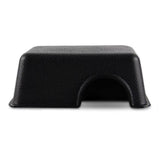
The leopard gecko needs at least two hides: one in the warm zone and another in the cool zone. This is not optional decoration, it is a basic behavioural need. A gecko without hides suffers chronic stress even if the rest of the terrarium is set up correctly.
The hide in the warm zone is where the animal digests and rests at the optimum temperature after eating. The hide in the cool zone is where it retreats when it needs to lower its body temperature. Without that choice, the animal cannot thermoregulate precisely.
Rocks and platforms
Flat rocks placed at different levels in the warm zone create thermal microzones, where each surface reaches a slightly different temperature. This makes it easier for the gecko to fine-tune its body temperature, moving between warmer and cooler spots.
This effect is especially natural when the heat source warms the surfaces directly from above, although it can also be used in setups with heat from below the substrate.
Artificial resin rocks can be a practical alternative, provided they are good quality, stable and free of sharp edges, although it is worth checking that they reach suitable temperatures compared with natural materials.
Branches and logs
Although the leopard gecko is mainly terrestrial, it does use low features to explore, hide or reach different areas of the terrarium. Adding a horizontal log or a low branch in the warm zone provides environmental enrichment without getting in the way of how the space is used.
It is advisable to use treated wood or items designed for terrariums, avoiding uncured wood or wood of unknown origin, which can retain moisture, grow mould or release unwanted substances.
Plants
Live plants are perfectly fine as long as they are species that are non-toxic to reptiles. Succulents, some low-growing spineless cacti and low-maintenance plants are the most common choices. Good-quality artificial plants are an alternative with no maintenance and no risk of toxicity. Avoid any plant that keeps the substrate significantly moist.
What to avoid in decoration
Any item with sharp or irregular edges can injure the animal, especially during shedding, when the skin is more sensitive. Porous materials that retain moisture, such as certain types of untreated cork or green wood, cause mould in a terrarium that needs to be kept dry.
How to set up a leopard gecko terrarium step by step
Step 1: Choose the terrarium
PVC terrariums are one of the best options for a leopard gecko: they insulate heat well, are lightweight, easy to clean and help maintain a more stable thermal gradient with lower energy consumption.
Glass terrariums also work well, but they lose heat more easily, especially in winter, so they require more precise temperature control.
It is advisable to choose a size suited to the adult animal from the outset, avoiding constant changes that cause stress and upset the parameters.
Step 2: Install the heat source.
The key to the terrarium is not just “having heat”, but creating a real thermal gradient that lets the gecko choose its temperature.
The most natural way to achieve this is with an overhead heat source (such as a heat spot lamp), which warms the surfaces directly and creates warmer and cooler zones within the terrarium.
As a complement, a heat mat can be used underneath, covering roughly a third to half of the floor in the warm zone. It is important that the terrarium has some ventilation underneath to prevent heat build-up.
The thermostat probe should be placed in the warm zone, at the point where the animal receives the heat (usually on or slightly within the substrate), and secured properly so it does not move.
At night, if the room temperature drops too low, a non-light-emitting ceramic heater can be used as support. Night-time light sources should never be used.
Step 3: Add the substrate
The substrate affects both behaviour and the thermal stability of the terrarium.
For hatchlings, solid surfaces such as slate or tile are recommended, as they make cleaning easier and remove risks.
For adults, more natural options such as coconut fibre or substrate for burrowers can be used, allowing some digging behaviour.
A layer of around 3–5 cm is enough to maintain thermal stability without hindering heat transfer.
Step 4: Place the hides and decoration
A functional terrarium should offer shelter and thermal variety:
- Hide in the warm zone.
- Hide in the cool zone.
- Moist hide (shedding box) in the warm-to-mid zone.
Rocks and platforms placed in the warm zone create thermal microzones, allowing the gecko to fine-tune its temperature.
Although it is mainly a terrestrial animal, adding logs or low structures provides environmental enrichment and encourages exploration.
The water bowl should be placed in the cool zone, away from the heat source, to avoid unnecessary increases in humidity.
Step 5: Install the lighting
Although the leopard gecko is crepuscular, it needs a clear day and night cycle.
A basic lighting system makes it possible to keep this rhythm stable.
If UVB lighting is used (advisable in many cases), a 5.0 compact bulb or 5.0 T5 tube should be installed at the correct distance and with no barriers such as glass or plastic, which filter out the radiation.
The lighting should be connected to a timer that reproduces a natural cycle according to the time of year.
Step 6: Check the parameters before introducing the animal
Before introducing the gecko, the terrarium should run properly for at least 24–48 hours.
It is essential to check:
- Surface temperature in the warm zone (with an infrared thermometer).
- Ambient temperature at both ends (with probes).
- Overall humidity in the terrarium.
Introducing the animal before these parameters have stabilised is one of the most common mistakes and can cause problems from day one.
Leopard gecko vs crested gecko: key terrarium differences
If you also have or are considering a crested gecko, the differences are big enough that each species needs its own setup:
| Parameter | Leopard gecko | Crested gecko |
|---|---|---|
| Terrarium type | Horizontal (terrestrial) | Vertical (arboreal) |
| Minimum adult size | 60 x 40 x 40 cm | 30 x 30 x 45 cm |
| Daytime temperature | 22–32 °C (gradient) | 22–26 °C |
| Maximum tolerable temperature | 35 °C briefly | 28–29 °C sustained |
| Main heat source | Heat bulb | Heat bulb |
| Relative humidity | 30–40% | 60–80% with drying-out periods |
| Misting system | No (moist hide only) | Yes, 1–2 times a day |
| UVB | Advisable (UVI 1–2) | Advisable (UVI 1–2) |
| Hides | At least 2 at ground level | Caves and vegetation up high |
The most common mistakes when setting up a leopard gecko terrarium
Measuring the air temperature instead of the substrate. The ambient thermometer reads 28 °C, which looks right, but the substrate in the warm zone may be at 21 °C. The animal is not thermoregulating: it is waiting for heat that never comes, with a slowed metabolism and impaired digestion.
Not using a thermostat with the ceramic bulb or heat mat. A heat mat without a thermostat can exceed 40 °C on the substrate surface. A gecko that cannot move away from the heat suffers belly burns that often go unnoticed until there is already tissue damage. The thermostat is not an accessory: it is the basic safety element of the terrarium.
Humidity too high. The most common mistake among keepers coming from other species or who assume that "more humidity means better care". Not with the leopard gecko: 50–60% humidity sustained for weeks causes respiratory infections that become chronic. Monitor it with a hygrometer and make sure there is enough ventilation.
Not having a moist hide. Without one, retained skin on the toes during shedding is only a matter of time. Chronic retention cuts off circulation and leads to the loss of toe tips. It is an entirely preventable problem with a low container, a lid with a hole and damp moss inside.
A terrarium too small for a real gradient. In a 30 x 20 cm terrarium no thermal gradient is possible: the warm and cool zones overlap. The animal lives at uniform temperatures it cannot regulate, which affects digestion, the immune system and behaviour in the long term.
What you need to set up your leopard gecko's terrarium
- Gecko terrariums — selected models in the right sizes for adult and juvenile leopard geckos
- Bulbs and heating — heat mats and ceramic heaters for the correct gradient
- Thermostats and thermometers — essential for monitoring temperature and humidity in real time
- Substrates — safe options for each stage of the animal's life
- UVB lamps — for the light cycle and vitamin D3 synthesis
Once the terrarium is properly set up, the next critical point is feeding. Gecko food →
Frequently asked questions about leopard gecko terrariums
How much does it cost to set up a leopard gecko terrarium?
The price of a leopard gecko terrarium depends on the type of setup and the quality of the components. A basic setup — terrarium, heating system with thermostat, thermometers, substrate and hides — can be relatively inexpensive compared with other reptiles.
It is important not to skimp on the thermostat, as it is the key safety element: a failure can cause dangerous temperatures inside the terrarium.
Can a leopard gecko live in a glass terrarium?
Yes, with conditions. Glass conducts heat to the outside more efficiently than PVC, which can make it harder to maintain the gradient in winter or in cold homes. With a well-calibrated thermostat that compensates for these losses, it works well. Make sure there is enough ventilation so that humidity does not build up.
What happens if the terrarium is too small?
There is no real thermal gradient. The animal cannot choose its body temperature, which directly affects digestion, the immune system and behaviour. In the long term, a small terrarium causes chronic stress and immunosuppression. The effects are not immediate, but they are cumulative and irreversible if they go on for months.
Can two leopard geckos be kept together?
It depends. Males should never be housed together, as they fight. Keeping a male with a female is not advisable either unless you intend to breed, because it can cause her constant stress.
In some cases several females can be kept together in large, well-structured terrariums, but it does not always work: hierarchies, stress or conflicts can arise. That is why the safest option is to keep them individually.