
Exotic insects
Discover our selection of live invertebrates, such as mantises, isopods and phasmids: exotic species that are easy to care for and perfect as pets.
First insect? The basics to get started
Terrarium and essentials to get started.
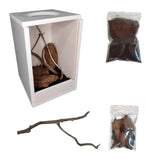
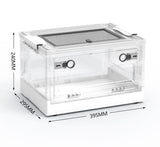
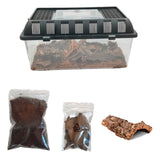
See also: Invertebrate Kits.
-
Premium feed for isopods, springtails and decomposers
Regular price From €2,50Regular priceUnit price €25,00 per kg -
Regular price From €2,95Regular priceUnit price per


Which insects can you keep as pets?
The most common pet insects are mantises, phasmids (stick insects, leaf insects and bark insects), isopods, some beetles and ornamental roaches. They all take up little space, are silent, do not smell and let you observe up close behaviours that no other pet offers.
- Mantises: predators that hunt live insects, one per terrarium. The orchid mantis, for example, mimics a flower.
- Phasmids: herbivores that mimic twigs or leaves and eat bramble and rose; they can live in groups.
- Isopods: small crustaceans that live in colonies, kept as collector species or as clean-up crews in bioactive terrariums.
- Beetles and ornamental roaches: collector species such as the metallic rainbow stag beetle (Phalacrognathus muelleri) or the domino roach (Therea bernhardti).
Where can you buy live insects?
The safest option is to buy live insects from a specialist shop that breeds its own animals. Scale Area is a licensed zoological establishment with its own breeding of mantises, phasmids, beetles and isopods, founded by a vet specialising in reptiles and exotic animals. All our animals are captive-bred in Spain, even though the species originate in Asia, Africa, the Americas or Oceania, so none are taken from the wild.
Live insects are dispatched Monday to Thursday and arrive within 24 hours, before 2pm on the day after dispatch, to mainland Spain and Portugal. Live animal shipping costs €8.95 and is free from €49. All live animal shipments come with a guarantee of arrival in good condition: if there is any problem, simply record a video while opening the parcel within the first 24 hours. For animal welfare reasons, live invertebrates cannot be returned.
Which insect should you choose to start with?
The easiest insect to start with is a phasmid, such as a stick insect or the leaf insect Phyllium philippinicum: it is herbivorous, eats bramble and rose leaves that can be found all year round, neither stings nor bites, and several can share a terrarium. The choice depends on what you are looking for:
- Watching it hunt: a mantis. The ghost mantis is one of the easiest and tolerates 18 to 30 °C, but it needs live food, starting with drosophila.
- Camouflage: a leaf insect, which sways like a leaf when the air moves.
- A colony that grows by itself: isopods such as Porcellionides pruinosus or Armadillidium, which are very prolific.
- Educational projects with children: phasmids and isopods, because you can watch the complete life cycle at home.
What terrarium does an insect need?
Insects that shed while hanging, such as mantises and phasmids, need a tall terrarium at least 3 times their length in height and 2 in width. For example, for a 6 cm mantis an 18 cm tall, 12 cm wide terrarium is enough. Isopods, on the other hand, live on the ground and are kept in a ventilated plastic box with about three fingers' depth of substrate.
Most species are fine between 20 and 30 °C, depending on their origin; below 20 °C a heat mat is advisable. Humidity ranges from 60% to 90% depending on the species and is achieved by misting, always with good ventilation to prevent mould. In invertebrate kits there are ready-made terrariums, such as the mantis and phasmid kit or the isopod breeding kit.